Who Should You Talk To And What Should You Say?
What should the first meeting between the federal contracting executive and my company be like? What should happen and what should it sound like? These are some common questions we receive from companies.
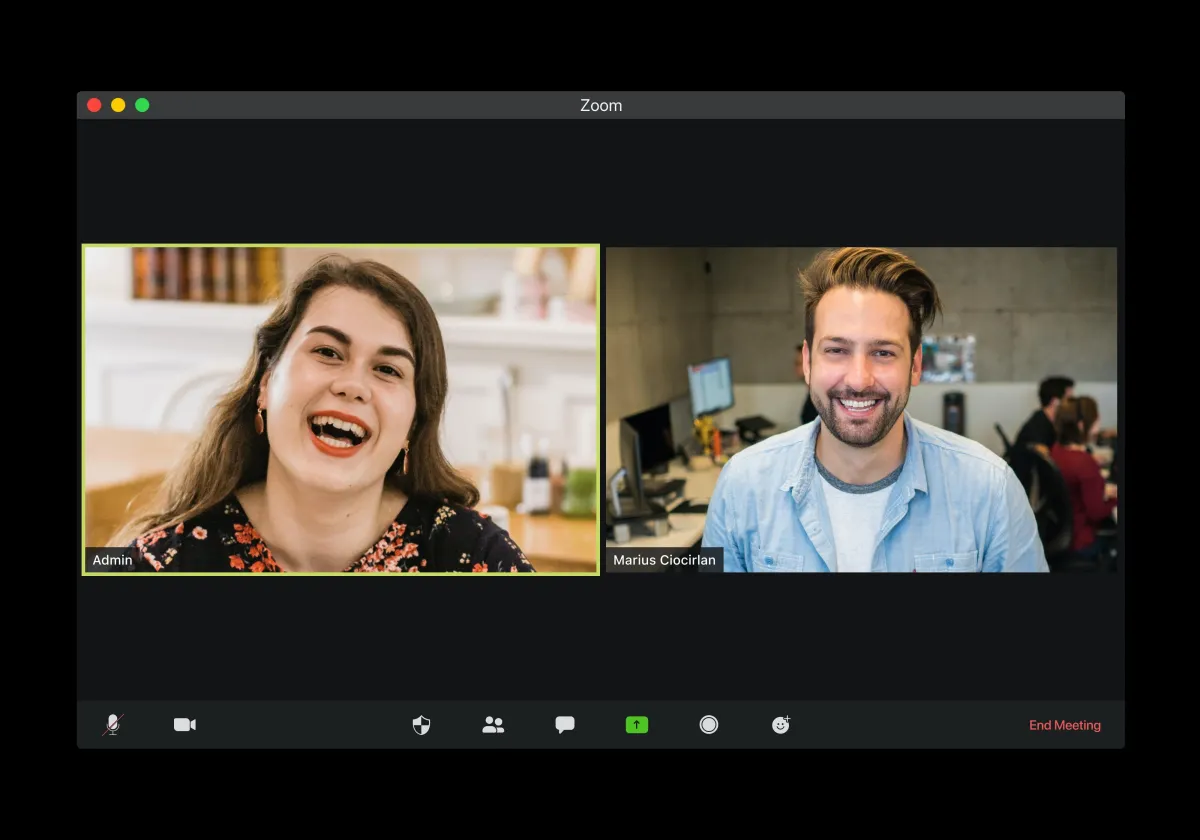
At times, companies don’t communicate directly to their clients because they’re intimidated. One of the reasons why is because they don’t know what to say. This article will help companies, engaged in local and state procurement, improve their business-to-business (B2B) transactions.
Start with Who You Should Talk To
Contracting Officers are specialists in government procurement. These specialists ensure that rules and processes are strictly followed. People involved in contract process support, so we’ll call them, Contracting Specialists.
A Contracting Specialist represents a customer. The customer is someone in the agency, who wants to procure something. These requirements normally instigate a program office. However, all your contracts will require Contracting Specialist when the process of procurement reaches a certain stage.
It’s best to speak with the person leading the procurement to fully understand your client’s needs. However, you can only do this if you have permission. It’s the reason why determining opportunities before the release of the RFP is crucial. Talk to a Contracting Specialist if you have inquiries about the process of procurement.
Most agencies have small business ombudsmen, who help small business owners learn their way around the process. Government contracting neophytes’ first step must be looking for and talking to a small business ombudsman.
Contracting Specialists may have big or small roles in choosing who gets the award. The only time when the contact information of the Contracting Specialist is published is when the procurement is declared. Government Program Managers are normally not published. They can be hard to identify, especially when you don’t know much about the agency organization.
In comparison, it’s still a bit similar to how big companies purchase things. Large corporations have purchasing departments. Somebody from said department usually drives the process they need to adhere to so they can procure whatever they need. The actual need normally comes from outside the Purchasing Department. A representative from the said department is the one who speaks with suppliers so other people in the company won’t have to. Those in Recruitment and Human Resources are similar. The differences are that procedures in government procurement are more complex, detailed, and in other instances, mandated by law.
What You Should Talk About?
Figuring out whom you need to talk to can be a difficult task. However, there are instances when there are people from the agency who would actually want to speak to you. After all, these agencies are on a hunt for companies that can provide them with the solutions they need. Therefore, you need to be prepared. You should know what to say when they contact you or when you are able to locate them.
Making the conversation have value to your clients is the most vital thing you have to do. You can introduce yourself; however, why would they care? What would they benefit from knowing who you are? It’s important to make it all about how your solution can help your clients achieve their goals. Skip the part where you focus on describing and introducing yourself. You can also ask them about their company’s goals. Actually, you want them to be the ones who are talking.
There are times when Contracting Specialists have the time to talk to you and are open to providing a lot of information. However, when procurements attract many proposals, they can be defensive. They may not give each caller a long time to pitch their offers. You might even have a problem contacting them through their phones.
The Contracting Specialists are the ones who are most experienced in their agency’s buying procedures and policies. Therefore, communicating with the specialists is quite helpful. However, you need to remember to do your research prior to calling them. Address their wants and needs, and avoid pushing them for the things they won’t be able to give you.
What Do You Really Say?
Avoid making the call about you. You need to make it about your client. Instead of saying, “My company provides… I’d like to speak with someone in charge of procurement,” flip your introduction and make the client the star of the conversation.
You may want to refer to the sample conversation starters below:
⦁ I’d like to check if my company can help [Client’s Company] with [learn more about the client’s current needs and problems] by [state your offer as a potential solution]…
⦁ I want to learn about your plans for [purchasing, building, complying, etc.] and find our what my company can help.
⦁ Is [fill in with information you have] a part of your short-term or long-term plans?
⦁ Have you thought of [state how they can benefit from you]?
⦁ We have experience and did lots of work in that area.
⦁ Do you have other options for procuring [fill in with relevant information]? Add more questions to help you learn what kind of contracting vehicles your client prefers.
You can also offer to provide them with additional information. A paper that shows how your company can provide the best solution is better compared to providing them with your company description. First, communicate the benefits your clients can experience from your solution. This may include lesser costs, increased reliability, boosts productivity, and the like. Secondly, discuss the features that come with your offer such as lighter design, fewer computers, and more.
What Other Questions Should You Ask?
Make a list of information you want to find out while you still have the client’s full attention. These questions may be:
⦁ What’s the status of the procurement? What are the milestones and processes?
⦁ What’s the procurement scope and size?
⦁ How are their needs currently being met?
⦁ What are the deadlines, time frames, and special dates?
⦁ Who are the points of contact?
⦁ Where will be the execution of the contract?
If you need help in winning Government contract biddings or discuss the teaming opportunities, feel free to reach out to Chris Stahl at [email protected]
Do you want to WIN a contract? Join our team today!
Opportunities we're pursuing recently:
About Us
BiC-1, LLC is a U.S.-based, diverse, Small Business Joint Venture Partnership, supported by our Channel Member Services and Supply-Chain Management Center (SCMC). We are a Channel of Best-in-Class, small businesses with extensive breadth and depth, specializing in areas of Data Center Management, Cloud Solutions, Cyber Security, Systems Integration, Worldwide C6ISR, Data Analytics, and Mission-Focused Engineering.
Our Capabilities
As a Potential PRIME Bidder for several opportunities, BiC-1 has experience with several DOD and Federal Agencies in the areas of Data Center Management, Cloud Solutions, Cyber Security, Systems Integration, Worldwide C6ISR, Data Analytics, and Mission-Focused Engineering, Program Management, Help Desk support and Emerging advanced technologies areas.
Our Channel of companies hold various Industry Certifications and Top-Secret and Secret Facility Clearances that enable our Team to bid on almost any Clearance required work.
We have access to over 10+ IDIQs/GWACs, including CIO SP3 SB, STARS III, ITES-3S to name a few.
The companies in our channel possess a diverse range of industry certifications, as well as Top-Secret and Secret Facility Clearances. These certifications and clearances equip our team with the necessary qualifications to bid on virtually any clearance-required work.
Our team has access to more than 10 IDIQs/GWACs, which includes notable contracts such as CIO SP3 SB, STARS III, ITES-3S, among others.
If your company possesses the qualifications required to participate in the Small Business Domains mentioned in the below-mentioned pools, we kindly request that you respond at your earliest convenience.
To qualify for this opportunity, your proposal must demonstrate that you have experience managing contracts with a total value of more than $2 million, with a preference for contracts with a value of $5 million or more. You should have at least 5 FTEs with the contract, and 20 FTEs or more would be a plus. Your proposal should also show that you have provided services that involve 5 or more personnel with individual security clearances, such as Secret, Top Secret, or Q (DOE). It is also important that your experience includes task orders from competitive environments such as MA IDIQ, GWAC, or Multiple Award BPA.
If this creates interest and you would like to discuss the teaming opportunities on OASIS Plus, please reach out to Chris Stahl at [email protected]
© 2023 STAHL Consulting, Inc.
All Rights Reserved.